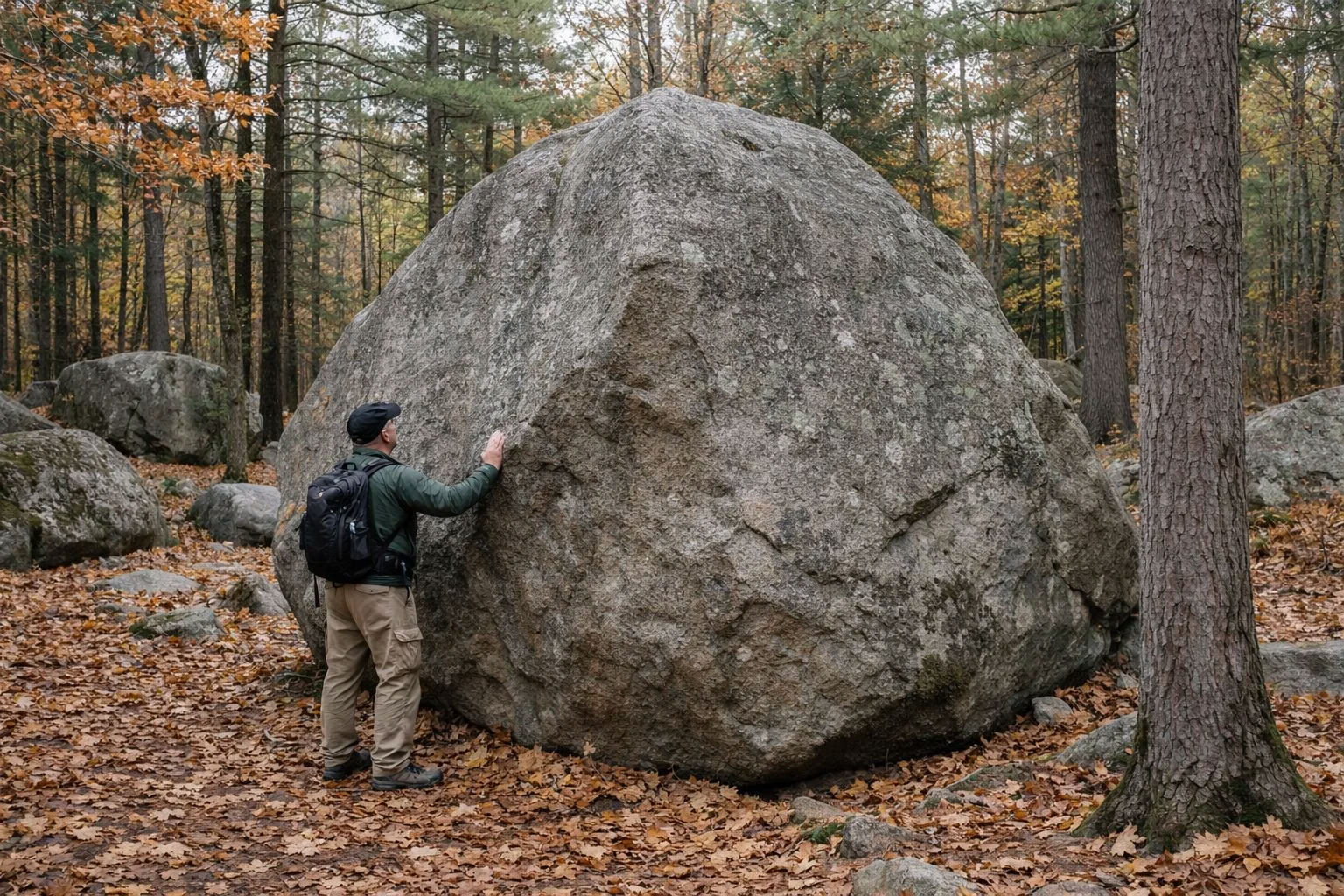
Pawtuckaway Boulder Field
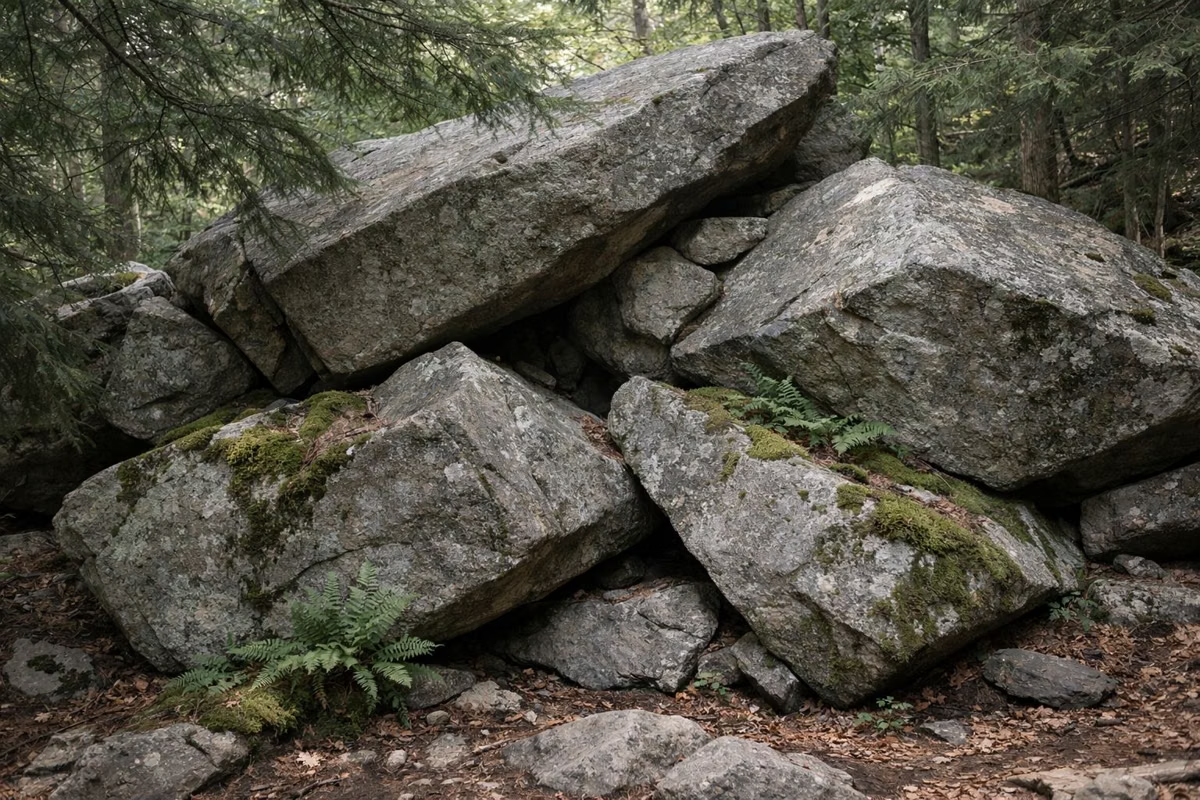
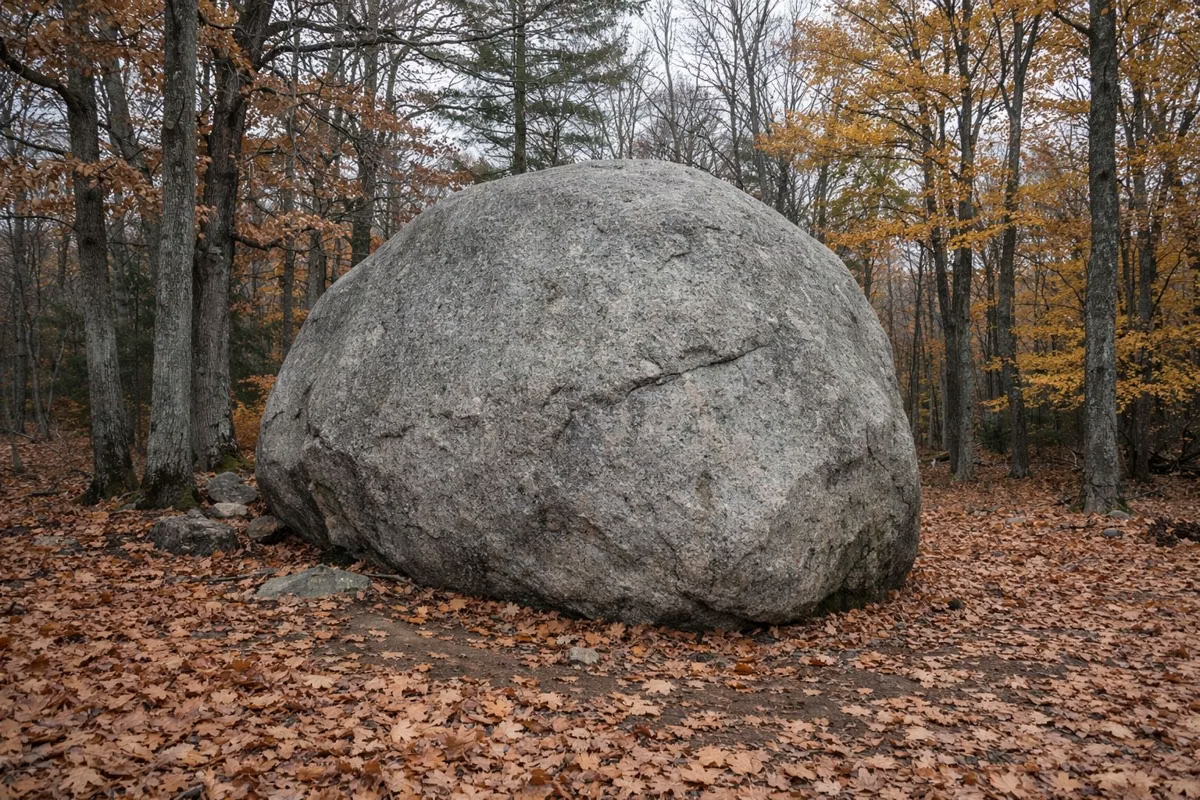
The Pawtuckaway Boulder Field is a cluster of huge glacial erratics, boulders left behind when the ice sheet melted at the end of the Ice Age, on the back side of Pawtuckaway State Park in Nottingham, New Hampshire. NH State Parks says the boulders are so large that rock climbers practice their techniques on them, and its own video tour calls the field an incredibly popular spot for bouldering. A state report on the park's ecology calls the field one of the world's largest collections of glacially deposited boulders.
The Boulder Field at a Glance
How the Boulders Got Here
The boulders came from the Pawtuckaway Mountains themselves. A state ecological report for NH Forests and Lands explains that they are monzonite, a gray, coarse-grained rock similar to granite that makes up the mountains' ring. The glacier plucked them from the hills as it moved and set them down where they sit today. A 1950 state geology report pins the source as North Mountain, the 1011-foot high point of the park, and says the same plucking hollowed out the Devil's Den.
That 1950 report, written by geologist Jacob Freedman for the state planning commission, describes blocks up to 60 feet in some dimensions, strewn for about a quarter mile along the trail, and calls them probably the largest group of boulders anywhere. Treat the superlative as his. The modern state report uses softer words: one of the world's largest.
A Field People Have Come to See Since 1878
The boulders were a destination long before the park existed. As early as 1878, a large party that included the state geologist and the governor came to see them, according to the NH Natural Heritage Bureau. The state bought its first piece of the park, 60 acres on Middle Mountain, in 1923. More history is on the about page.
Where the Boulder Field Is
The boulder field is not by the beach or the campground. NH State Parks' video tour drives from the main area around to the back side of the park and walks in on the Boulder Trail, and notes that the South Mountain trailhead is just down the road. NH Forests and Lands sends visitors to the South Mountain lot by Route 107, from Deerfield or Raymond, to Reservation Road; no agency publishes separate directions to the boulder field itself. The Boulder Trail is marked on the park's trail map, and directions for both sides of the park are on the parking page.
Bouldering at Pawtuckaway
Climbing on the boulders is allowed and common. NH State Parks shows bouldering and roped climbing on its Pawtuckaway page, and its campground map lists climbing among the park's activities. It does not publish a guide to problems, grades or landings, and this site doesn't either. If you are new to it, climb with someone experienced and bring pads and a spotter.
- There is no staff at the boulders. Off-season, NH State Parks reminds visitors they need their own skill and gear, and that they assume all risk.
- Carry out every piece of tape and every wrapper. There are no trash cans in the park.
- Day-use fees apply. A hiking pass can be reserved for busy days.
- Don't cut trees or limbs. NH State Parks forbids cutting any vegetation in the park.
Rare Plants Around the Rocks
The NH Natural Heritage Bureau found that the Pawtuckaway ring-dike, the volcanic ring of hills that shed these boulders, holds one of the highest concentrations of rare species and exemplary natural communities in New Hampshire. Its inventory treats the boulder field, a nearby rocky ridge and Dead Pond as one study site. Stay on the trail between boulders.
Good For
- Boulderers and climbers who want big glacial erratics in southeastern New Hampshire.
- Families who want to see something unusual on a short walk.
- A pairing with the fire tower, whose trailhead is down the same road.
Maybe Skip If
- You want a lake day. The beach is on the other side of the park.
- You want a long view. The tower on South Mountain has the views; the boulder field is in the woods.
Boulder Field FAQ
Where is the Pawtuckaway boulder field?
On the back side of Pawtuckaway State Park in Nottingham, NH, not at the main beach entrance. NH State Parks' video tour notes the South Mountain trailhead is just down the road from it.
How were the Pawtuckaway boulders formed?
They are glacial erratics. Glaciers plucked blocks of monzonite from the Pawtuckaway Mountains and dropped them when the ice melted near the end of the Ice Age.
Can you go bouldering at Pawtuckaway?
Yes. NH State Parks says rock climbers practice on the boulders and calls the field an incredibly popular bouldering spot. It publishes no route guide, so climb within your ability and bring your own pads.
How big are the Pawtuckaway boulders?
A 1950 state geology report describes blocks up to 60 feet in some dimensions, strewn for about a quarter mile along the trail.
Is the Pawtuckaway boulder field free?
The park's day-use fee applies: $5 for adults and $2 for children 6 to 11, with children 5 and under free.